
Kenwood DMC-V55 - The Technical Initiative
YouTube - @TechnicalInitiative
Instagram - @TechnicalInitiative
Overview
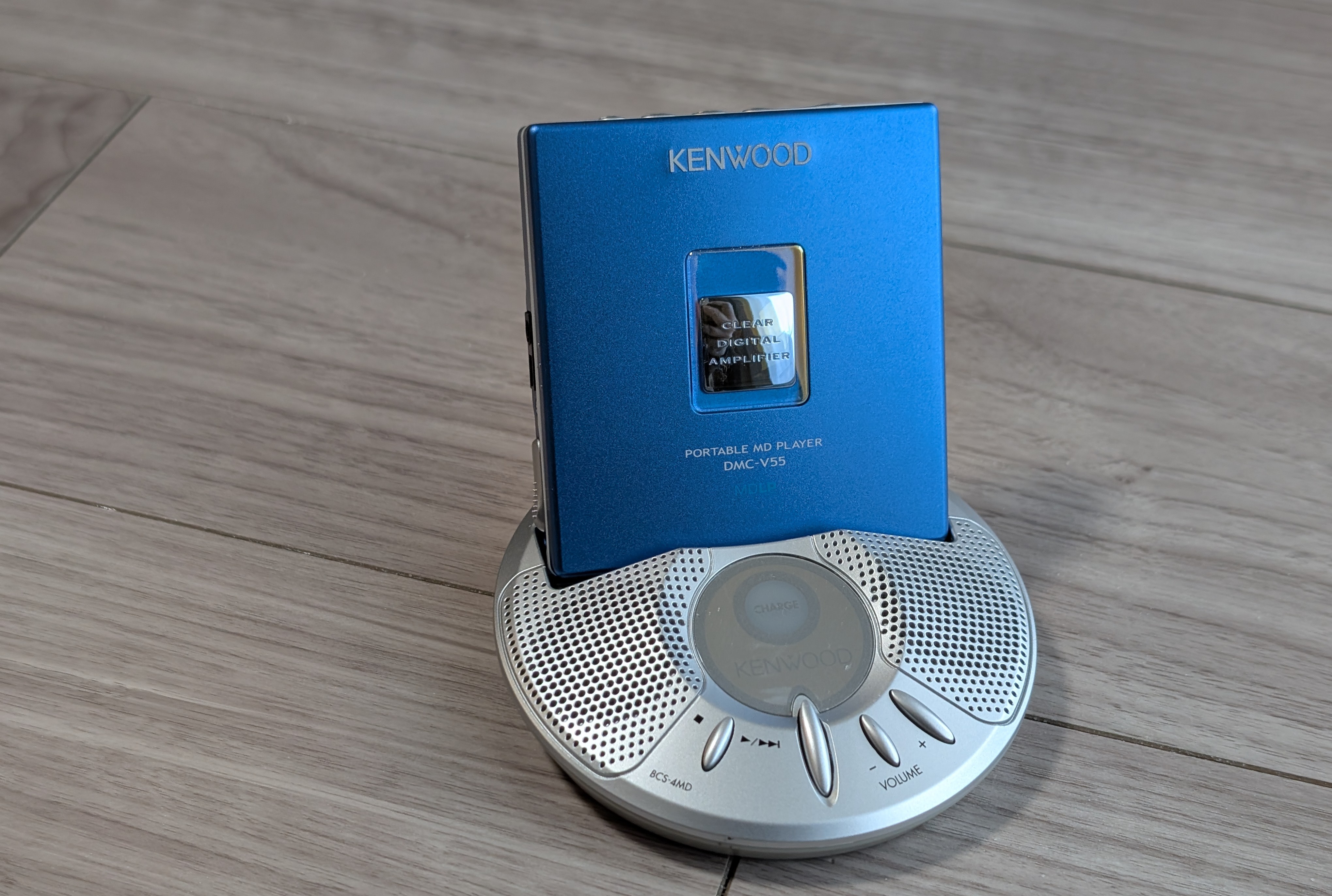
After taking a look at some early MiniDisc portables like the Sharp MD-MS200, I thought it would be nice to look at something at the other end of the spectrum: The Kenwood DMC-V55, released in October of 2005, during the tail-end of MiniDisc’s popularity.
Unlike some of the other Sharp “clone” models like the early SP-only Sharp portables, these later Kenwood portable players didn’t exactly match up with a similar Sharp model.
Related Instagram post:
https://www.instagram.com/reel/DQCEWouEXIn/?utm_source=ig_web_copy_link&igsh=NTc4MTIwNjQ2YQ==
As you can see, the Kenwood DMC-V55 is a stunner, but it’s more than just a good-looking portable. I’ve been a fan of these Kenwood portables for multiple reasons.
None of which relate to the sound from the speaker dock… but I digress.
Kenwood has a history of designing some stylish, great-sounding portables. The headphone amp and tuning on this model has a warm, powerful sound that makes it easy to enjoy a wide range of music.
First, a bit of background about these model numbers…
Kenwood portable model numbers kept going up the alphabet starting from their DMC-A7R in 1994 to their DMC-G7R (AKA Sharp MD-MS200) in 1997, and they started using double-digit numbers in 2000 with their player-only DMC-M33.
Starting at this point, the second pair of numbers designated a “tier” with 33 being basic, 55 being mid-tier, and 77 being their high-end.
Related Instagram post:
https://www.instagram.com/reel/DDQ1ZPHxnrI/?utm_source=ig_web_copy_link&igsh=MzRlODBiNWFlZA==
For example, the DMC-S55 referred to their mid-tier portable in 2003. Note, the DMC-S77 and DMC-T77 had nine LEDs that lit up in various sequences when playing or docked. Please check out the amazing MiniDisc Wiki for more information on these and other models.
MiniDisc Wiki - https://www.minidisc.wiki/equipment/kenwood/portable/start?srt=%5Eequipment.release
Design
By the end of the era (MiniDisc-wise), manufacturers like Sony and Panasonic were pushing the limits of device-sizing, with some players just barely larger and thicker than the discs themselves.
The Kenwood DMC-V55 (and similar S/T/V brethren) wasn’t one of these super-slim portables.
Solid, mostly-metal construction and a size just a bit thicker than two MiniDiscs means it wasn’t large by any means, but it wasn’t a Sony MZ-E10. Still, it was sturdy and pocketable with plenty of physical buttons to get by without a remote.
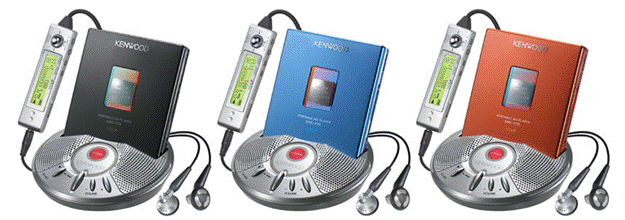
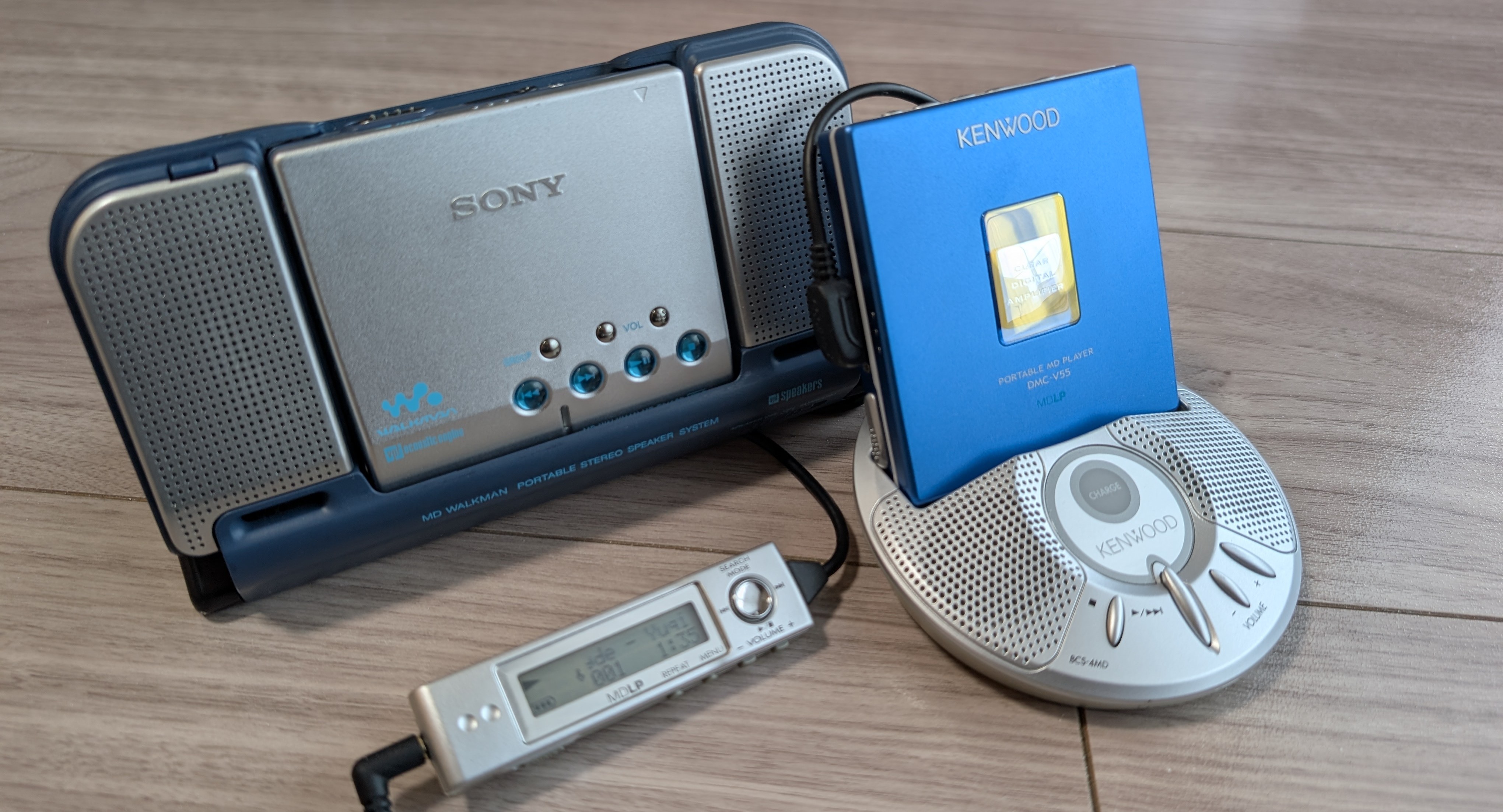
Coming in blue, black, orange (red?) and silver, each DMC-V55 had recessed “Clear Digital Amplifier” badge covered in clear plastic that results in a nice, classy look if you can get one that’s not too scratched up. For contrast, the black model has its badge surrounded by orange and the silver model has the badge surrounded by blue.
The circular speaker dock houses two small speakers and allows you to easily drop the player into the base and seamlessly transition the playback to the dock’s speakers. After more than a decade of oxidation, the connection between the player and the dock can be a bit flaky, resulting in some static or a finicky connection that limits charging. Some contact cleaning with a bit of alcohol and a cotton swab can help.
The dock itself is simple with a charging light and some simple controls. If you have a gumstick in your player, it will charge it while playing music.
As nice as it is to look at and have the player docked, the speakers are definitely not something you’ll want to listen to if you have any other options. They are technically better than nothing, but I would use headphones or IEMs whenever possible.
For use on a desk or tabletop for ambient sound, they will be serviceable, but you’ll definitely be missing out on the quality sound that these portables can offer.
Controls
At the top edge of the Kenwood DMC-V55 there are playback controls including separate volume buttons. The back side of the player has a hold switch, and the left edge (if looking at the player’s front panel) has the eject slider and headphone/remote jack.
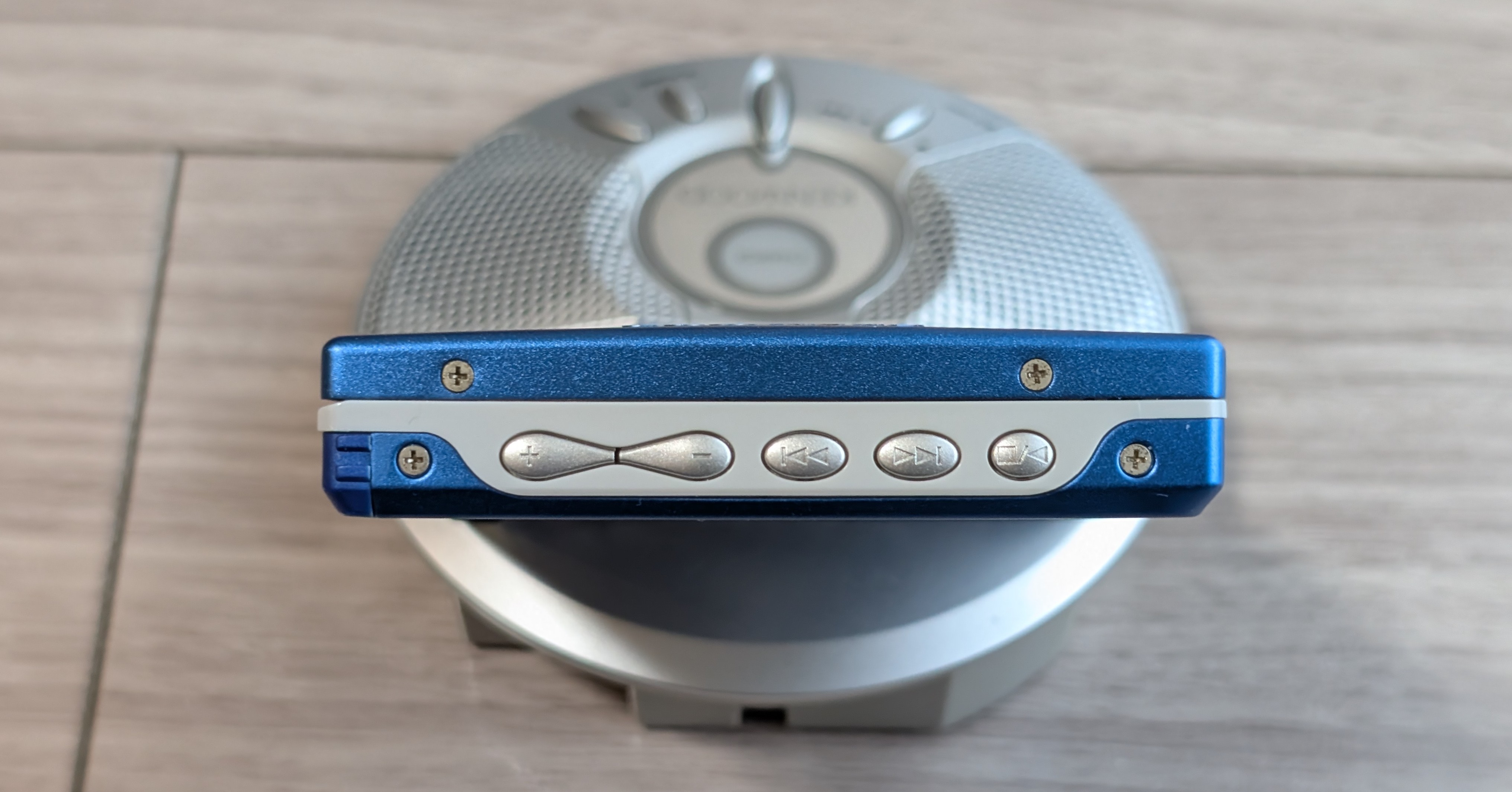
Overall it’s a simple control scheme that can work well without the remote, but with a remote this good, you really should use it!
The Kenwood remotes that came with the S/T/V series really are some of the best remotes out there, in my opinion. There are fancier remotes for other brands like the Sony RM-MC40ELK, but outside of the “wow” factor, I actually prefer this Kenwood remote in terms of usability.
These remotes aren’t that fancy looking, but they incorporate all the important elements combined with a useful layout that’s easy to learn, making dim or dark lighting no problem.
The remote itself looks like a fairly standard rectangular bar, but it houses a two-line backlit display and a four-way round directional pad. The feel of the d-pad is quite positive and accurate. The bottom edge houses a hold slider and buttons for repeat, menu, and volume +/-.
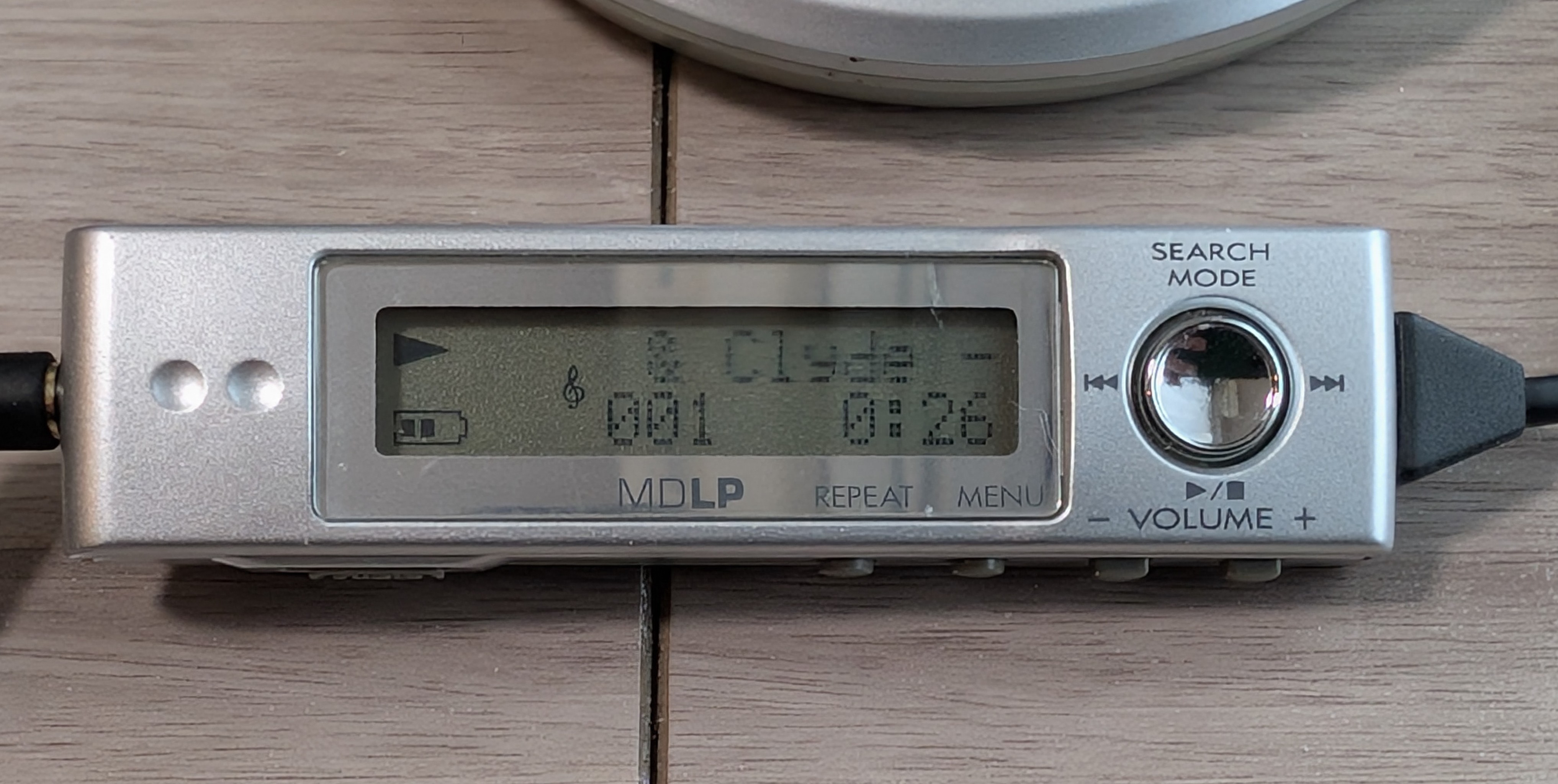
When you’re in the menu, the d-pad lets you easily select options including sound modes, playback modes, alarm/timer, and more. The combination of sound quality, battery life, and an easy-to-use remote made Kenwood models some of my most-used bedside companions.
Regarding the speaker dock’s controls, it has a stop button, a play/fwd button, and volume controls.
Battery Life
The DMC-V55 was no slouch when it came to battery life. Kenwood kept pushing the limits with their S/T/V line and the DMC-V55 was quoted as having up to 207 hours of battery life using LP4 (boo) and a combination of a gumstick and AA batteries.
I can’t say I’ve taken the time to accurately measure the battery life, but rest-assured that a gumstick will take you past a full day’s usage easily. Besides, these Kenwood-specific AA sidecars are not easy to find these days.
Modern gumsticks seem to be a bit hit or miss, without the same higher-quality standards compared to the manufacturer-supplied ones back-in-the-day, so YMMV.
For what it’s worth, I’ve mostly stocked up on the “Jinmasi” red/black gumsticks and those seem to perform fairly consistently and much better than the “Doublepow” blue/white ones that I used to use.
Usage
A good-looking, great-sounding portable with a great, intuitive two-line display remote - what’s not to love?
Aesthetics aside, the DMC-V55 is a great-sounding player for the genres I listen to. I think it’s got a great dynamic range, a warm, fun sound signature, and plenty of power for IEMs like my trusty Yamaha EPH-100 and Victor HA-FX99X.
As mentioned before, the remote is well laid out and easy to use in dim or dark lighting. The two-line LCD is great for checking out your track data and navigating the menus.
Interestingly, I feel like Kenwood has more of a “true shuffle” mode than other Sharp or Sony models. What I mean is that most of the random or shuffle modes seem to randomize a list of tracks based on the TOC just once, when requested. The device will then play through that list without repeating a track until it reaches the end of the list it created.
With the Kenwood models I’ve tested, it seems to randomly select a track each time, sometimes resulting in playing the same track within just a few instances. I was able to recreate this multiple times. To some, it may defeat the purpose of selecting random or shuffle, since they do want to hear everything on the disc, but I thought it was interesting.
Another piece of trivia from the MiniDisc Wiki is that this model also remembers the position of the last 16 discs you’ve played, so when you insert them again, it can continue where you left off. For long LP2/LP4 discs, this could be handy and this “feature” can be defeated if you don’t need it, just check out the MiniDisc Wiki for more details.
Wrap up
I listen to music to unwind, relax, and enjoy myself, so I’m not looking to deeply analyze all the nuances in a track even if I’m listening with high-end equipment. I prefer a slight low-frequency boost which suits Trance, K-pop, J-pop and dynamic instrumental music, along with whatever else I feel like. I like my sound dynamic, warm, and fun - never flat, cold, nor analytical.
Most MiniDisc players sound “good enough” considering the medium, but Kenwood (and Sharp) players are my preferred portables for their sound signatures that apparently get along with whatever I’m playing. Sony models are definitely enjoyable but usually need a bit of tweaking to get them to sound the way I like it.
The Kenwood DMC-V55 and similar models in the S/T/V series ensure I never have a boring train ride out here in Japan, whether it’s melodramatic K-pop ballads or dynamic anime themes from Sawano Hiroyuki.
I have found this generation of Kenwood player-only models fairly robust and have had more success than failures when buying “unconfirmed” or “junk” players. If they do require a quick battery contact cleaning or maintenance, they’re easy to get in and out of, with no difficulty compared to some other models.
Getting one with the speaker dock may be a lot harder these days, but consider that dock a novelty, not a necessity.
If you get your hands on one of these S/T/V series (especially a S or T77) with a remote, you may have the only portable player you’ll ever need.