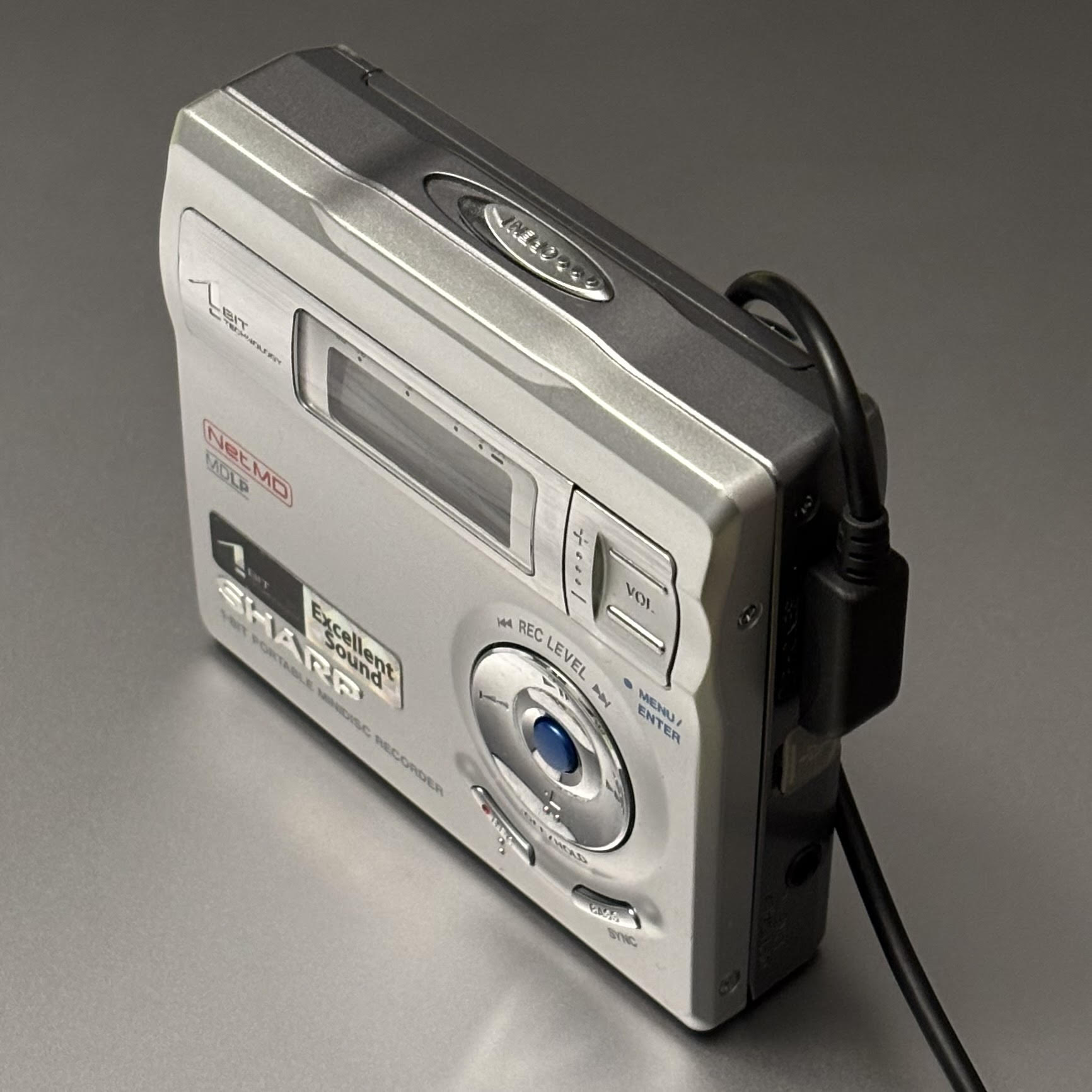
Released in 2003, the Sharp IM-DR410H is uncommonly seen online these days, giving it a sort of mystique. Apparently targeted to a European market, its user manual comes in six languages in the following order: German, French, Swedish, Italian, Dutch and finally English.
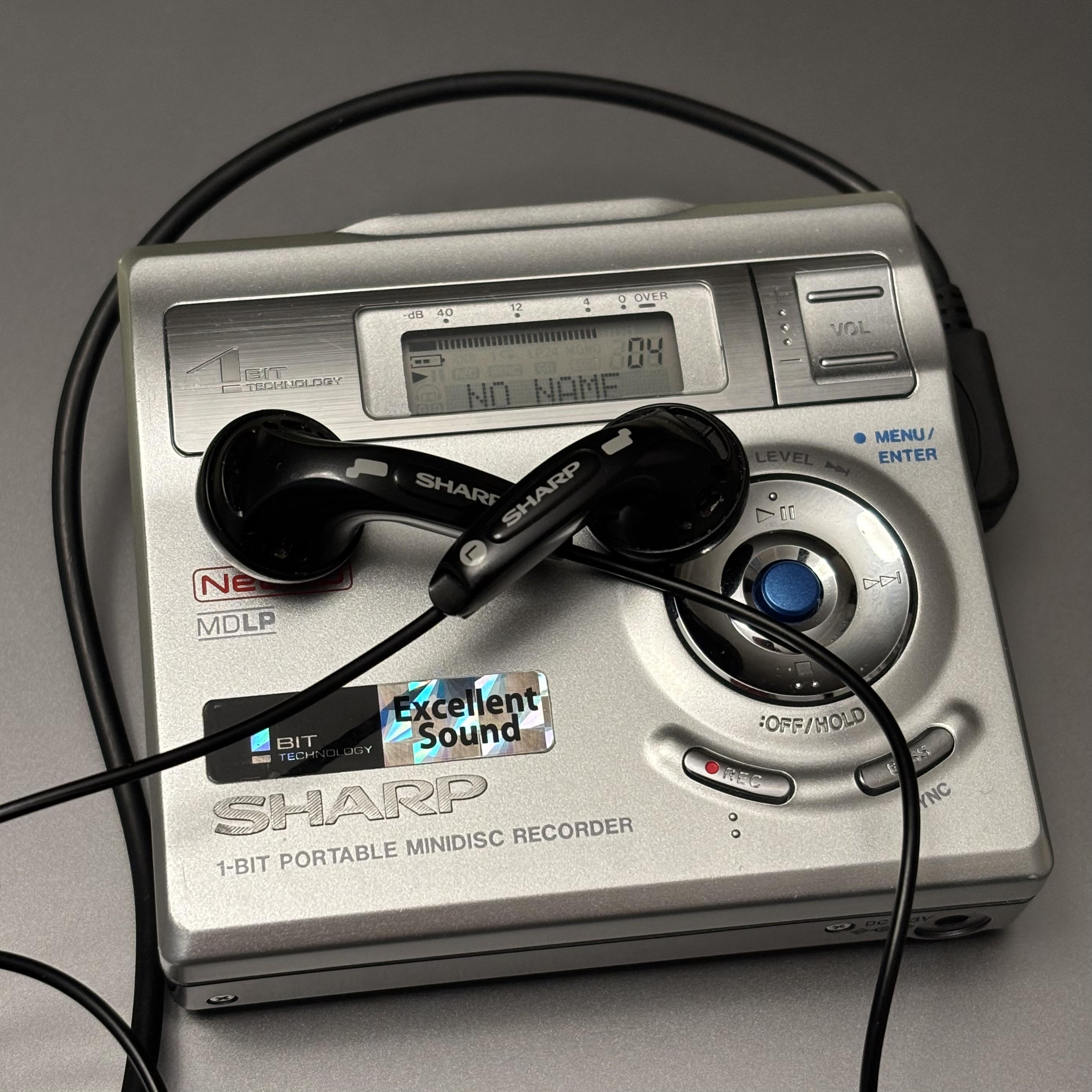
It arrived a year after Sharp first introduced their 1-Bit digital amplifier into the portable MD format in their MD-DR7 and MD-DS8 “Auvi” models. The DR410H shares the 1-Bit technology but minus the “Auvi” branding. Unlike the MD-DR7 and MD-DS8 this unit is thicker, bulkier, made of mostly plastic rather than metal, and runs on single AA rather than gumstick battery. These days a portable MD player that uses AA batteries without a sidecar is a welcome thing. The DR410H boasts 44 hours of continuous playback time in SP on a single AA. There is no supplied remote. Despite its bulk, the styling remains elegantly understated. I do not know the release price, but presumably this was a budget priced alternative to the MD-DR7.
The recording and playback features are fairly standard for the era. It has MDLP, can record via optical/analog line in as well as Net-MD via USB, including high speed transfer using Sharp’s BeatJam software.
Three notable features:
- There are three bass settings, but rather than just bass boost, each one is more like an eq pre-set with customizable low and high frequency boost, 5 settings for each within each of the three “bass” levels.
- There is a “stamping titles from a master disc” feature. If you have two discs with the identical track list, the unit can copy the disc and track titles from the “master disc” and then you would swap in the second disc and it will write the title data to the second disc.
- Sharp’s 1-Bit amps work in conjunction with balanced 4-pole TRRS outputs. DR410H originally came with Sharp branded Sennheiser earbud phones that are wired for balanced 4-pole output with a 3.5 mm plug. It also came with a short adapter cable for 3.5 mm 4-pole to 3.5 mm 3-pole.
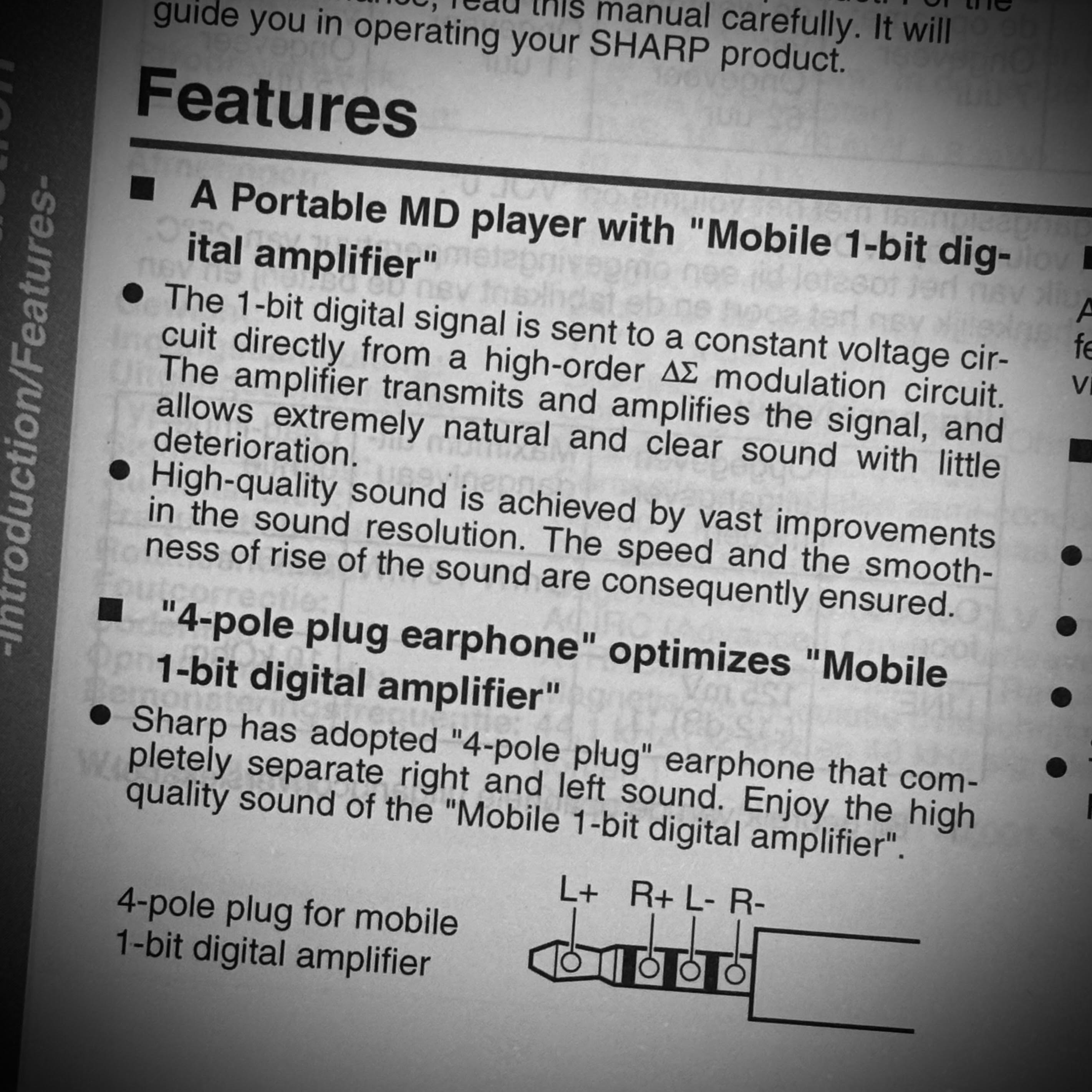
The balanced output is supposed to deliver more true separation of the left and right channels and fuller, richer sound. When using standard 3-pole headphones some of the stereo separation is lost. So, one downside of this technological move by Sharp is that balanced headphones are required for maximum sound quality. In my case I have only one set of balanced earbuds, a very nice Sharp/Sennheiser pair that came supplied with my Sharp MD-DS33 player. They don’t fit my ears as well as my go-to Sony MDR-E838s but otherwise they are very good sounding phones.
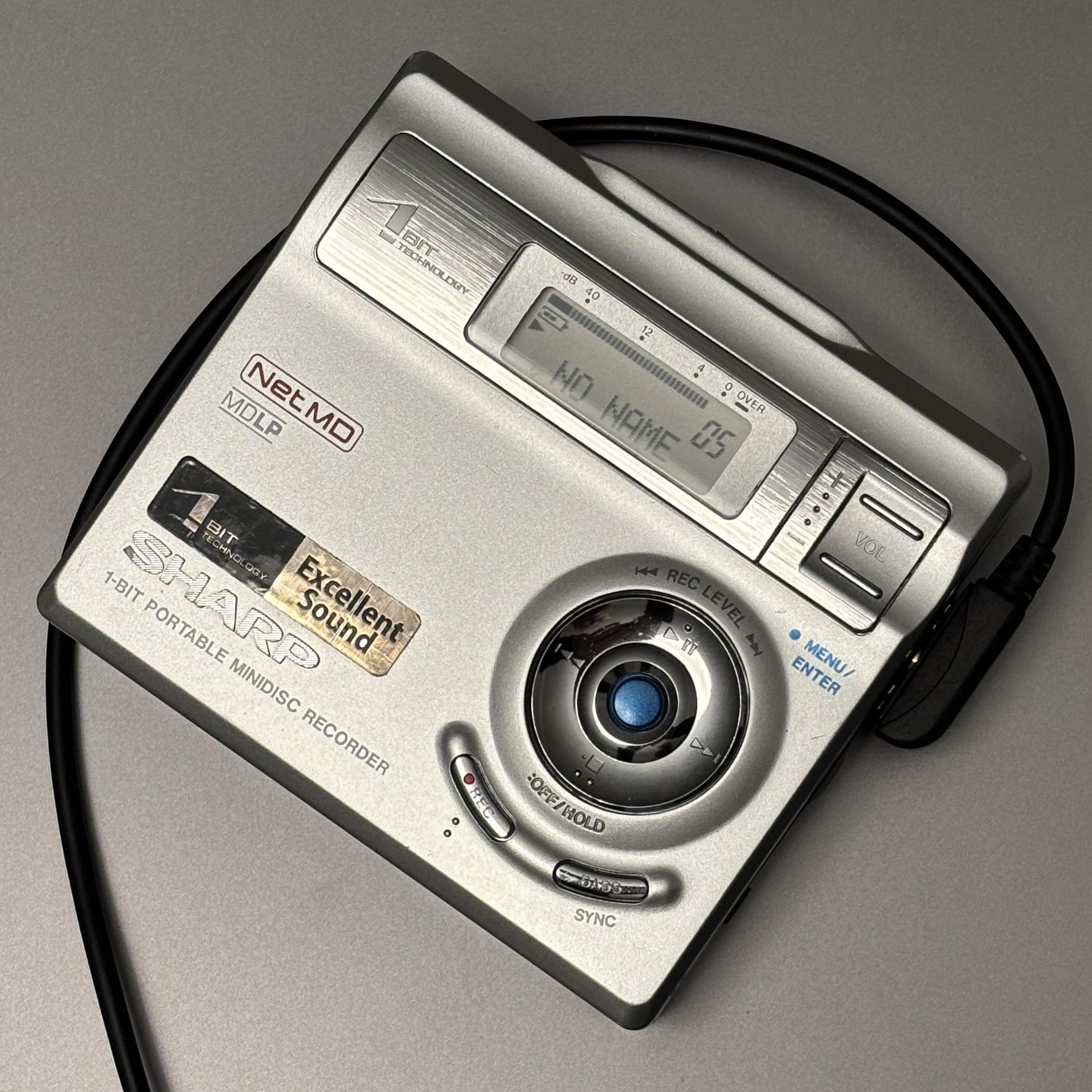
I’ve been listening to a variety of recordings over the past week, spanning various genres. The DR410H mated to the Sharp balanced earbuds delivers satisfying sound quality overall with fairly powerful output at 8 mW per channel. This beats Sony’s standard 5 mW but falls short of the mighty Sharp 821 at 10 mW per channel. To my ears, I find most Sharp units give a more “blended” sound compared to most Sony players which deliver a highly detailed soundstage with distinct separation of various instruments and voices. My only reservation about the sound quality comes from knowing that Sharp’s MD-DR7 also has a 1-Bit amp and 8mW per channel of output but sounds much fuller and more nuanced than DR410H.
In conclusion, Sharp’s IM-DR410H is a value-priced version of its premium MD-DR7 predecessor, which delivers very good sound and has useful playback and recording features. Additionally it features a 1-Bit amp and balanced 4-pole output. If you see one for a good price, definitely worth picking up!