
MZ-EH1 Review by SoggyMD
Intro:
I've been fortunate enough to amass quite a collection of MD and Hi-MD portables throughout my time engaging in this hobby. I do my best to use and enjoy all of them, rotating out fairly regularly, but there's one device that stands above the rest in more ways than one... despite quite a laundry list of flaws.
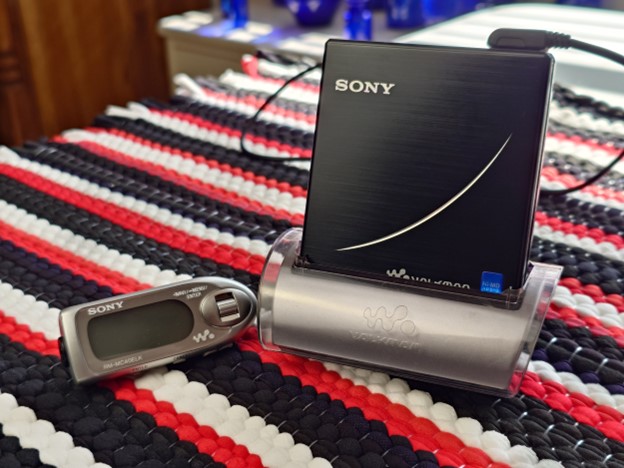
The MZ-EH1 was released in July of 2004, alongside its recorder and downloader brethren — the MZ-NH1 and MZ-NH3D. These were the launch lineup of portables for the new Hi-MD format, which eventually aimed to replace aging DAT portables and usher in a new, premium multimedia option to existing MD customers. Even if the writing was on the wall that the iPod generation had already begun, these units tried their best to keep the momentum going for just a little bit longer. As such, each attempted to be the very best in their respective categories. And for the EH1, I believe this is especially apparent.
Form factor:
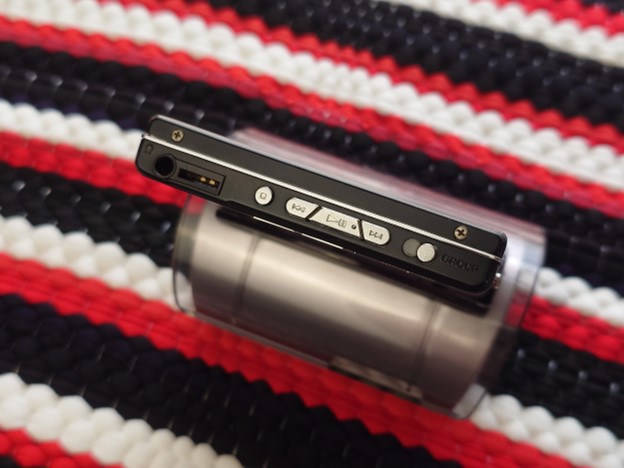
The EH1 has a fantastically well thought out design for a player, probably more so than any other MD device I've ever used. Comfortably fitting into an inner jean or shirt pocket - the buttons are along the top of the machine, and easily accessible. They are also well marked, with a small nub on the play/pause button for use without looking. Compared to the MZ-E10, a device just slightly thinner overall, the EH1 feels rather robust in overall structure.
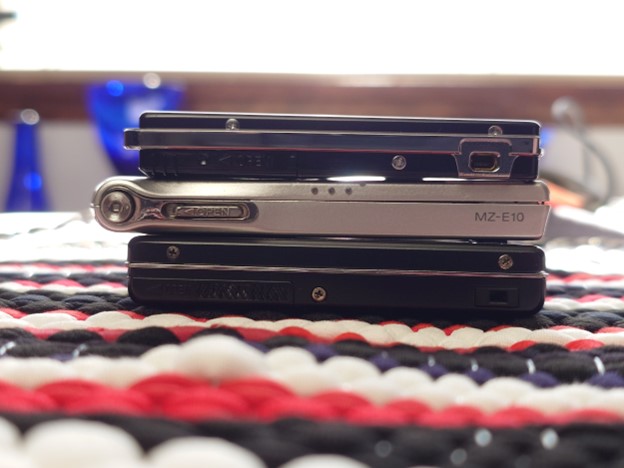
Unlike most devices in its size range, it utilizes a full-sized 3.5mm jack with Sony's typical remote connector. While the lettering seems to flake off of the casing rather easily (this is an incredibly common issue for EH1s), the shell is thick enough to survive drops and resist denting. There is a little flexibility in the very center of the lid, but it’s incredibly easy to remove and flatten out any imperfections. Oh, and that weak lettering issue? No biggie, as the brushed metal finish is absolutely beautiful with or without the text. It's rather scratch resistant as well, with any marks on mine predating my ownership.
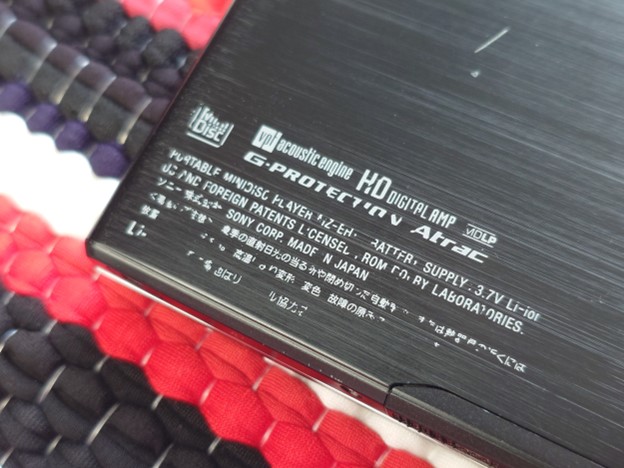
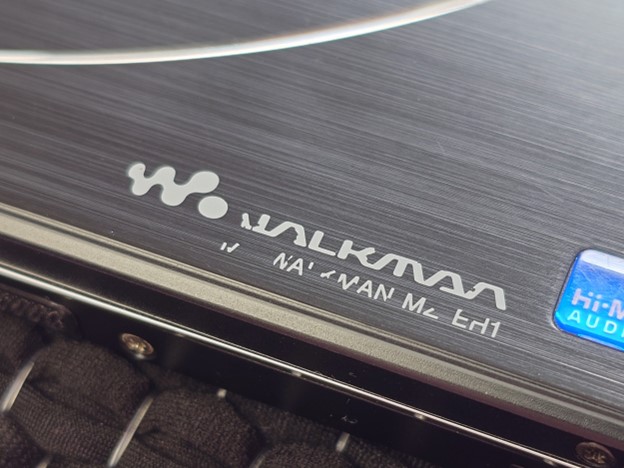
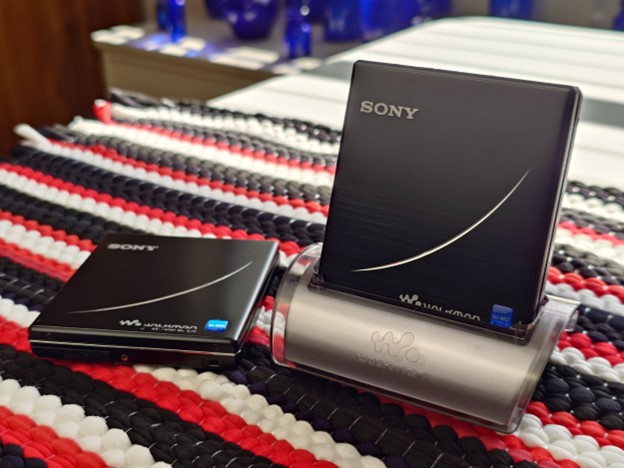
All around, the EH1 feels *solid* and well-built without being too dense or heavy. It also helps that the mechanism is whisper-quiet, something I've come to appreciate over time. Most MD units, even with a proper clean n' lube, are much louder when seeking than the EH1. It seems Sony was pulling out all the stops to attract people to the dwindling MD market at the time, and gave one last shot at a premium playback-only device. Unfortunately though, it didn't succeed. It's become very hard to locate EH1s in the modern day. Even the much beloved but rare NH3D is easier to find. I was fortunate enough to end up with two EH1s, albeit unintentionally. Two auctions came up at nearly the same time (a rare sight) and I lowballed my bid on the rougher unit so hard I figured I'd certainly lose. Yet, somehow, I didn't.
Longevity:
Both of my EH1s were listed as untested "junk" and imported from auction sites in Japan. One of the two did eventually need a bit of lubricating after the occasional dropout occurred with 1GB discs, but that was all. The EH1 is easy enough to disassemble, though the plastic surround for the docking port and the hold switch are rather finicky. The lid also lacks awkward attachments and latching points, which is refreshing if you’re used to working on late MDLP devices. Impressively, I haven't met anyone with an EH1 that is unable to read discs just yet. They must be out there, but at least anecdotally the EH1 is a tough little guy - even if my sample set is rather small. I've subjected my rougher unit to several fumbles and bumps, and it kept on playing just fine. I’m a little more careful with the other, but it still gets plenty of use.
Sound:
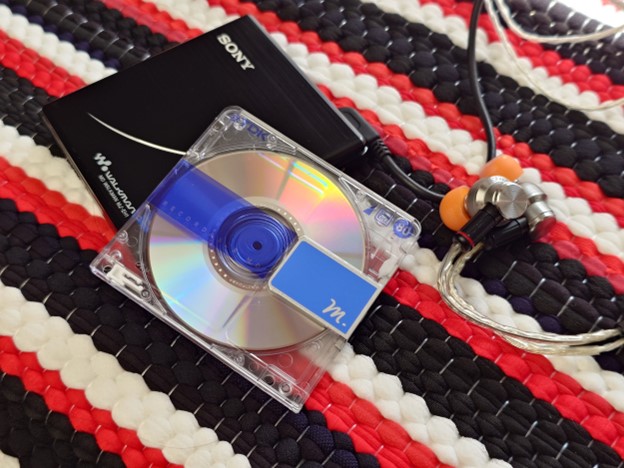
A far more extensive and in-depth review of the EH1's sound signature has been done by Fauxtaku Lounge/Ohm Image, but I will do my best to summarize my thoughts after many hours of use and comparison with the ever-growing pile of machines in my collection. The EH1 is, simply put, the best sounding portable MiniDisc player in nearly every regard. The noise floor is virtually non-existent, stereo separation is excellent, and the typical Sony baked-in bassy signature is less apparent than most of its MD counterparts. It's fairly neutral in comparison, and truly sounds fantastic even with rather sensitive IEMs. I've paired several with the EH1, and all have performed wonderfully. My most used set is a pair of JVC HA-FDX1s with the green treble filter, which compliments the EH1 perfectly. For those interested in EQ, the EH1 is equipped with a six-band equalizer and up to two custom sound settings to make use of it. It's no brick-sized DAP with a 4.4mm jack and a thousand audio processing features, but it comes startlingly close for such a petite and relatively ancient device — especially when using Hi-MD's trademark PCM or 352kb/s ATRAC encoding.
When my EH1s initially arrived, I wasn't expecting to use them as much as I do, as they're rather precious. Nonetheless, the rougher of my two units has become my daily device. I've swapped out for other models at times, but always end up coming back to the EH1 when I want to do some serious MD listening.
Practicality:
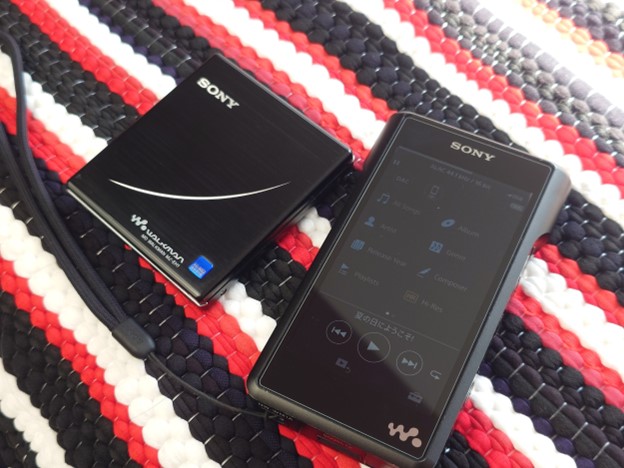
Nearly all Hi-MD machines have certain drawbacks as compared to their predecessors. The EH1 is no exception. The relative price of Hi-MD units is off the charts, and this applies doubly to the EH1. As alluded to before, it’s very probably the rarest Hi-MD unit, and they regularly fetch prices well above the hyperinflated RH1... for reasons even I don't understand. I was fortunate enough to snag my units for relatively sane prices in comparison. I have both of them for around the typical price of one, though I wouldn't recommend anyone with sanity attempt the same. If you manage to snag one, you’re already rather lucky.
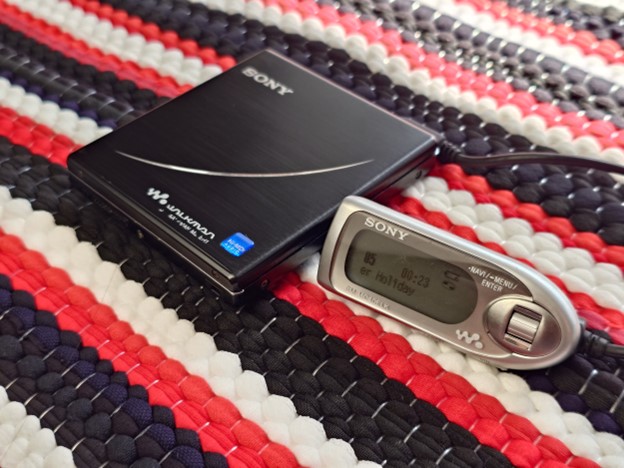
Like all first-generation Hi-MD devices, the EH1 shipped with an RM-MC40ELK remote - while it's very useful for scrolling through a large number of songs or albums, especially using 1GB discs, I tend to pair the EH1 with a 35ELK instead. The 40ELK is wonderful, but rather chunky and with a weaker clip than earlier models. They also tend to develop blank columns on the screen over time.
Battery life also isn't on the same scale as late MDLP portables, with the EH1 eking through with around 20 hours under most circumstances. If you're playing full-fat CD resolution files though, you're looking at more like 7-8 hours… which isn’t all that great. Speaking of file formats, the EH1 cannot play MP3 files natively if that’s what you’re looking for. Only MZ-RH models and their professional MZ-M equivalents can, as well as the odd MZ-DH10P camera... but none of them particularly well.
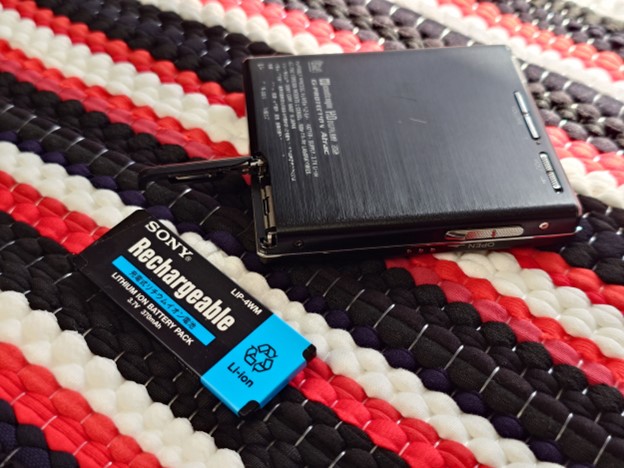
The Li-ion LIP-4WM batteries are also harder to find and more expensive than your typical gumsticks. However, I've found that these batteries don't lose their charge nearly as quickly when sitting out unused. Plus, with the lack of leaky Ni-MH electrolyte involved, corrosion is hardly a concern. Li-ion bloating might be, but out of six original LIP-4WM batteries I've owned, only one began to bloat. One other eventually stopped holding a charge, but the other four are at or near their original capacity over 20 years later. Some aftermarket batteries are being produced nowadays though, and they're pretty good. Also, unlike the lithium “DIY” gumsticks that are out there, the LIP batteries can be charged within the device itself. Though, for the EH1 this is a harder task as it requires the dock to do so. I was lucky enough for one of my units to come with one, but I've never seen them come up for sale individually. It doesn’t help that locating the proper 6V cable with an L-shaped tip is somewhat difficult.
Perhaps the biggest drawback of the EH1 as a player is that it lacks a AA sidecar attachment. If your LIP-4WM runs out of battery, then you run out of luck. I tend to carry an extra battery around with me just in case, though I rarely have to use it.
Conclusion:
All in all, the EH1 is a fantastic device and in many ways the zenith of portable MD players in terms of outright sound performance and design. It pushed the confines of what an MD machine could be in ability and size while remaining usable; something I firmly believe the E10 from a couple years prior failed to do. The EH1 is my favorite of them all, and as you can see by my page over on the MiniDisc Wiki (https://www.minidisc.wiki/user/soggymd) — I have quite a few devices to compare with.
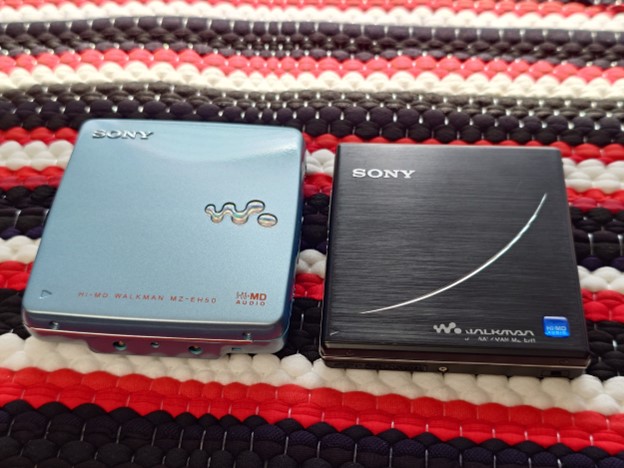
Nonetheless, I wouldn't be able to recommend one to anyone in good faith. They're simply too expensive, hard to find, and comparatively annoying to power and run for long periods. It may be a technological marvel of its time, and incredibly impressive to hold in the hand and use… but I would say it's best to tread lightly. For those wanting to dip their toes into the Hi-MD world, I would recommend the EH50 or EH70 instead. Both are nearly as capable, sound fantastic, and have virtually none of the headaches associated… all for less than $100 on average. The EH1 is a fascinating glimpse into the last push for MD, and if you do manage to find one for a steal — by all means, buy it and enjoy it! Don't let it sit on a shelf or succumb to the temptations of reselling it for a sizable profit. It's a small but exclusive club to be in, and I wouldn't wanna be anywhere else!
-SoggyMD