Sony MDS-S500: The Desktop MD Deck That Still Crushes in 2025
by Endless Mike
The Sony MDS-S500, released in September 2003 in Japan, arrived near the end of the classic MiniDisc era and just before Hi-MD tried to reinvent the format one last time. It’s a small-format NetMD + MDLP deck built for people who actually use MiniDisc every day. Not a portable, not a flashy ES-series beast, just a clean and compact workhorse that still feels premium in 2025.
I bought mine from Yahoo Auctions Japan via Buyee, the listing simply said “tested working” but didn’t show it powered on. Still, the price was right at ¥10,000, so I took the gamble. When it arrived a few weeks later, it turned out to be in excellent working condition, just the deck and a power cord, no remote included. I tracked down a Sony RM-D47M which is the U.S. version of the original remote for cheap on eBay. Same layout, just English labels, and it works perfectly. The deck powered right up via a 120v to 100v stepdown transformer, connected to my computer instantly, and started transferring without a hitch. It’s quietly competent in that unmistakable Sony way, understated, precise, and clearly built to last.
Design & Build
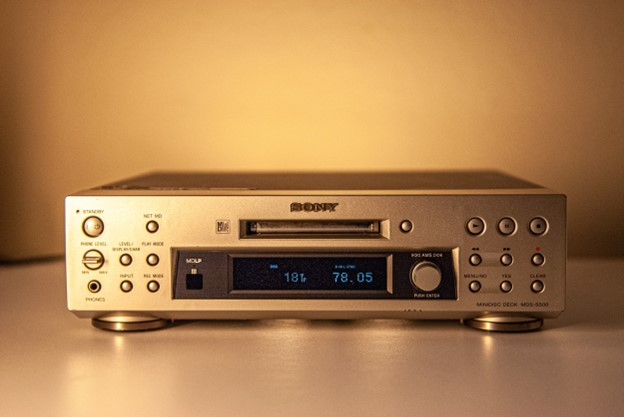
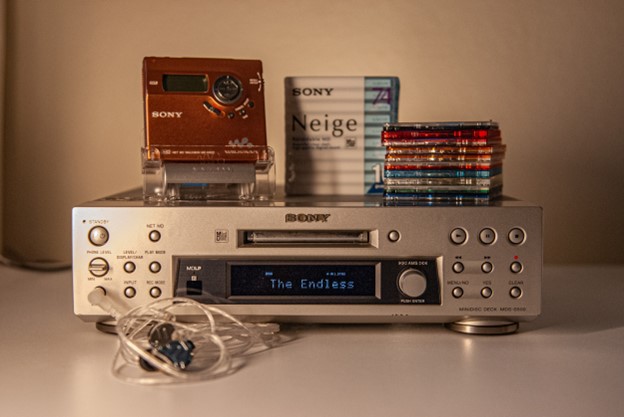
The MDS-S500 nails that early-2000s Sony look (before the bubble design era), brushed aluminum face, crisp dot matrix VFD display, and just enough buttons to feel serious without clutter. The proportions are small at 280×82.5×300mm, about half the width of a full component deck, and it weighs in around 2.5 kg. Compact, but not lightweight and feels substantially built.
Everything about it feels deliberate. The jog dial has that smooth, damped motion Sony always got right, and the buttons click with satisfying precision. The slot-loading transport is fast and quiet, and even two decades later mine feels tight with no wobble or hesitation. A belt change will be inevitable at some point but now it's loading great.
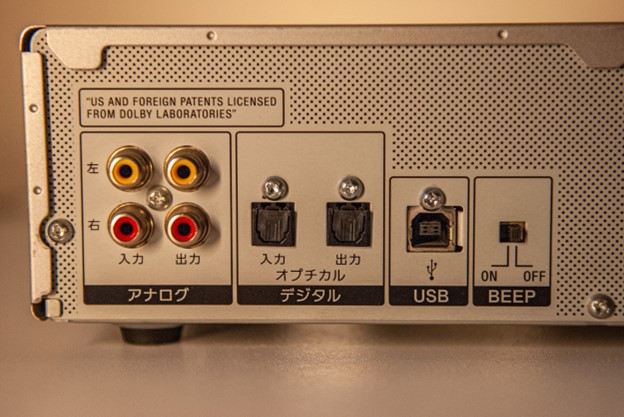
On the rear panel you get analog RCA in/out, optical digital in/out, and a USB Type-B port for NetMD. The headphone jack up front includes its own level control, which is handy for not needing an external amp. The overall layout is practical and symmetrical, typical Sony minimalism from when their industrial design still balanced form and function beautifully.
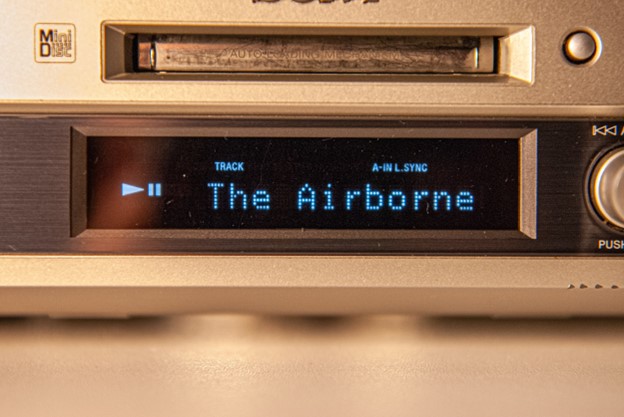
If you’re used to Kenwood’s chunkier K-series or early Sony full sized ES decks, this thing feels downright sleek. But it doesn’t give up any of the tactile charm: the aluminum face catches light nicely, the transport sounds precise, and the display still glows bright enough to feel futuristic in a dim room. It’s an honest, quietly confident piece of gear built for long sessions.
Features & Performance
Under the hood, the MDS-S500 is classic late-era Sony: refined, stable, and quietly over-engineered. It runs ATRAC Type-S and allows for both SP and MDLP recording. SP mode sounds full and dynamic, and the MDLP options (LP2 and LP4) make it versatile for longer recordings. I think LP2 in particular holds up well for sound quality, great for background mixes or long archive transfers and LP4 is serviceable for podcasts and long recordings.
The NetMD interface is the real convenience here in a modern workflow. The deck connects to your PC via USB Type-B, letting you transfer and title discs directly without having to record in real time. It works perfectly with Web MiniDisc, Platinum MD, and ElectronWMD on modern systems with no need to fight with SonicStage. Transfers happen several times faster than real-time recording, and for most workflows, it makes MiniDisc feel modern again.
Connectivity covers everything you’d expect from a proper deck: optical and analog RCA in/out, plus a front headphone jack with its own volume control. Sony’s analog stage is clean and I found recording from vinyl to hold up well.
The S500 includes Time Machine Recording, which buffers a few seconds of input before you hit record. This is perfect for catching a missed cue or the start of a live track or recording from the radio if you are still into that. All the standard MiniDisc editing tools are here too: divide, combine, move, erase, and rename, all accessible directly from the front panel or remote.
In use, the S500 feels sharp and deliberate. The interface is straightforward, the display stays legible from across the room, and it handles long LP recordings without breaking stride. It’s the sort of machine that quietly earns your trust, not flashy, just consistently good.
Verdict
The MDS-S500 is one of those rare decks that gets everything right. It’s compact, reliable, and smartly built, a perfect balance between the MDS-A1 with no controls and portable NetMD recorders. With Type-S, MDLP, and NetMD support, it hits that late-era sweet spot where MiniDisc had fully matured, even if the rest of the world had already moved on.
Two decades later, it’s still a great daily driver. Plug it into your PC, load up your software of choice (and the Zadig driver fixer on Windows), and it behaves like something half its age. For anyone digitizing, dubbing, or just enjoying the format, the S500 quietly delivers the best version of what MiniDisc was always meant to be, simple, dependable, and a little bit overbuilt.
It may have arrived just before Hi-MD tried to take the stage, but the S500 feels like the format’s true send-off: polished, capable, and endlessly practical. Just remember, like all NetMD decks, it only supports transfers to MiniDisc, not from it. If you’re hoping to rip audio off your discs you’ll still need a NetMD portable for that job.
Pros & Cons
Pros
- Compact, well-built design with a half-width chassis and quiet, fast transport.
- Full NetMD integration - reliable USB transfers and titling through Web MiniDisc, Platinum MD, or ElectronWMD.
- Front-panel editing - divide, combine, move, and rename tracks without needing a remote.
- Clean analog stage - low noise and excellent linearity for both digital and line-in recording.
- Time Machine Recording - buffers several seconds before record to save missed starts.
- Excellent everyday usability - intuitive menus, bright display, and strong reliability even 20 years on.
Cons
- No audio extraction - like all NetMD decks, transfers only go to MiniDisc, not from it.
- No Hi-MD support - limited to the classic MD and MDLP formats.
- Display space - long titles can feel cramped during on-device editing.
Tech Specs
ModelSony MDS-S500
Release Year September 2003
Type Desktop MiniDisc Deck
ATRAC System ATRAC Type-S
Recording Modes SP / LP2 / LP4 (MDLP)
PC Connectivity NetMD (USB Type-B)
Supported Transfers PC → MD only (No MD → PC USB upload)
Inputs / Outputs Optical In/Out, Analog RCA In/Out, Headphone Out, USB
Editing Features Divide, Combine, Move, Erase, Title Entry (front-panel controls)
Special Functions Time Machine Recording (~6 sec buffer)
Power Consumption ~14 W
Dimensions / Weight 280 × 82.5 × 300 mm / 2.5 kg
Made In Japan